
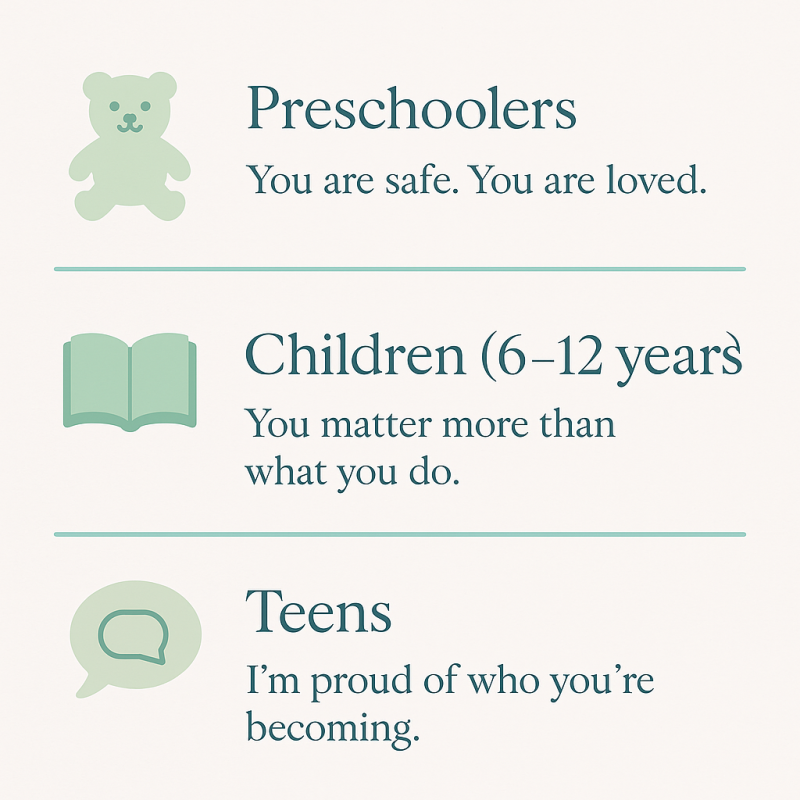
As parents, our words shape our children’s inner world. Every correction, encouragement, bedtime chat, and car ride conversation helps build their beliefs about themselves, others, and life. Long after they’ve left home, the messages they’ve heard—again and again—become part of their internal compass. So, what do you want your child to know for certain?
Perhaps it’s this: Mistakes are part of learning. You can always come home to love and acceptance. Who you are matters more than what you do. You’re part of something bigger than yourself.
To embed these truths, we need to speak them early, often, and in age-appropriate ways. Here’s how that might look:
Preschoolers (0–5 years):
Young children are still discovering the world and their place in it. They need short, clear, repeated phrases.
Say things like:
“It’s okay to make mistakes—we learn when we try.”
“You are safe, you are loved.”
“We take turns because everyone matters.”
Correction at this age should be gentle and affirming. “Oops, we don’t hit—we use our words,” keeps the tone kind while teaching boundaries.
Children (6–12 years):
This age is marked by growing independence and a thirst for understanding. They’re forming core beliefs. Use language that builds resilience and identity.
Try saying:
“It’s brave to ask for help.”
“Who you are is more important than getting it right.”
“Even when things are hard, we don’t give up.”
When correcting, start with connection: “I know you were frustrated. Let’s figure out a better way together.”
Teens (13–18 years):
Teens often wrestle with identity, belonging, and purpose. They still need affirmation—just in more grown-up language.
Say:
“I trust your judgement, and I’m here if you need me.”
“You’re not alone in this.”
“I’m proud of the person you’re becoming.”
Correction should preserve dignity. “I see why you made that choice—let’s talk about how it worked out,” invites reflection, not shame.
No matter their age, children are listening. Let your words echo with acceptance, truth, and hope. By knowing what you want your child to know for certain, you can intentionally sow those messages into thier lives. You’re not just managing behaviour—you’re planting lifelong messages.
