
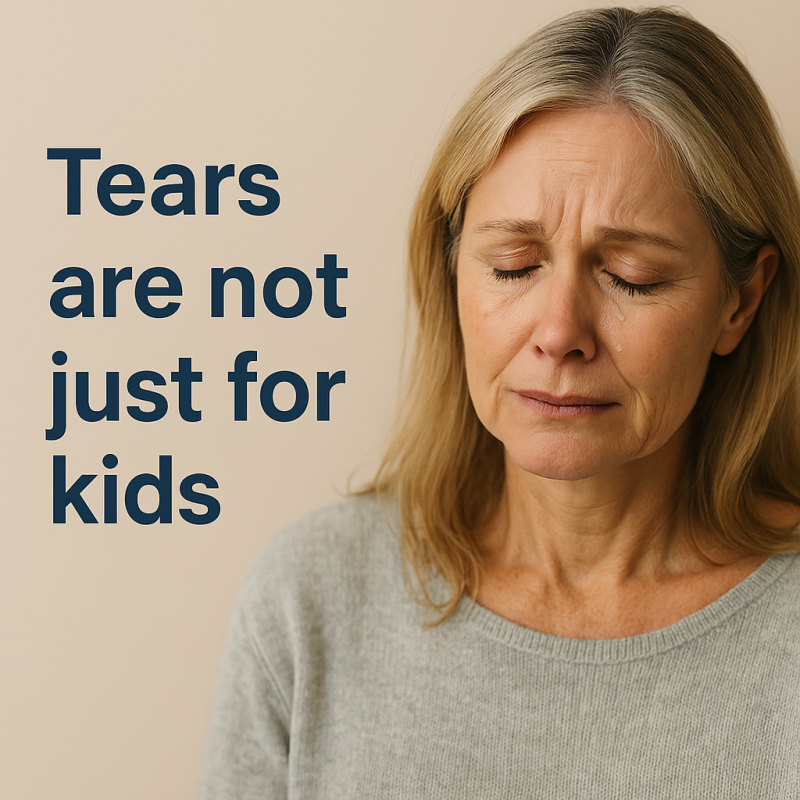
When was the last time you cried without feeling the urge to apologise? For many adults, tears come with baggage—embarrassment, shame, even the need to justify them. But tears are not just for kids. They’re a natural biological response, not a weakness.
In counselling, it’s common for tears to show up. Some clients say “sorry” before they even start to cry. But here’s the truth: our bodies often know what we need before our minds catch up. Crying is one way we regulate—physically, emotionally, and psychologically. It’s a release, a recalibration, a healing mechanism hardwired into us.
Unfortunately, cultural norms—especially around men and boys—often teach us that crying is a sign of fragility. The reality? It takes strength to feel, and even more to express it. Saying “Tears are not just for kids” reminds us that adulthood doesn’t mean emotional suppression; it means making space for authentic experience.
In therapy, tears are always welcome. They signal movement, truth, and the courage to face what hurts. In my practice, I invite clients to listen to their bodies rather than shaming them. Crying isn’t the end of control—it’s a sign that something deep inside is being acknowledged, finally.
So next time tears well up, try asking: what is my body telling me right now? Let that question guide you rather than the instinct to hold back. Tears are not just for kids—they are for anyone with a heart, a history, and the bravery to heal.
