
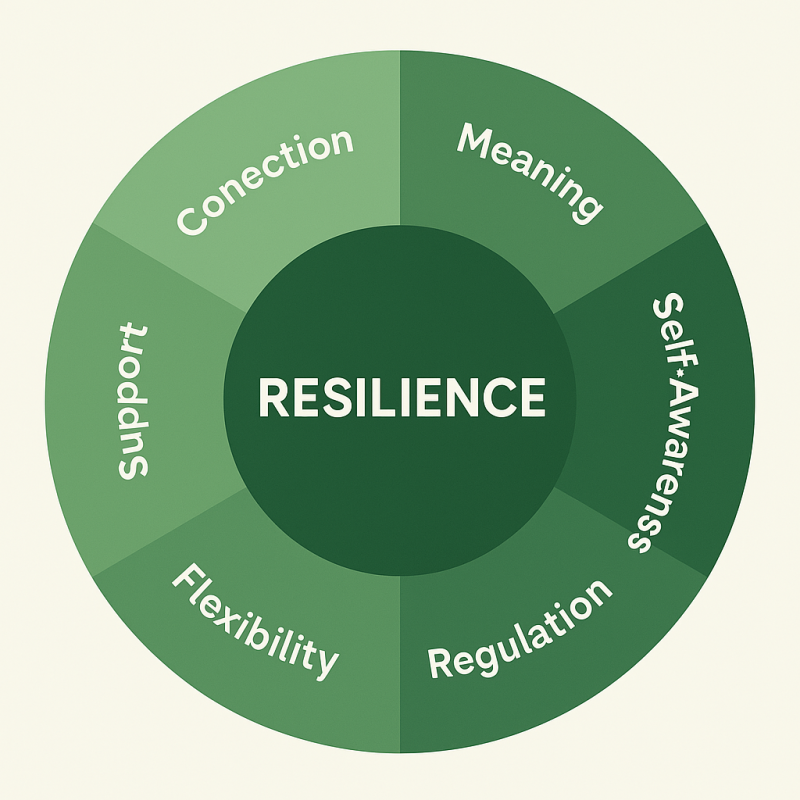
Life doesn’t come with a map. But The Wheel of Resilience offers something close. It’s a simple, powerful way to understand how we bounce back, hold steady, and keep moving—especially when the road gets rough.
For many women aged 30 to 60, resilience isn’t just personal. It’s relational. You’re often the emotional curator of your family’s experiences. You hold space for your children’s growth, your partner’s struggles, and your own quiet battles. You’re the one who remembers birthdays, senses tension before it erupts, and keeps the household rhythm when everything feels offbeat.
The Wheel of Resilience reminds us that strength isn’t just about pushing through. It’s about connection, reflection, and recovery. Think of it like spokes on a wheel—each one representing a part of your wellbeing. Emotional regulation. Support networks. Purpose. Boundaries. Rest. When one spoke weakens, the wheel wobbles. But when we tend to each part, we roll forward with more ease.
Resilience in marriage means knowing when to lean in and when to step back. It’s the quiet work of repair after conflict. The choice to listen, even when you’re tired. The courage to ask for what you need. For mothers, resilience is often invisible. It’s in the midnight wake-ups, the school forms, the deep breaths before hard conversations. It’s not glamorous—but it’s powerful.
The Wheel of Resilience isn’t a checklist. It’s a reminder that you’re allowed to be whole.
That tending to your own wellbeing isn’t selfish—it’s foundational. When you’re grounded, your family feels it. When you’re supported, your relationships deepen. When you rest, you restore the energy that fuels everything else.
So take a moment. Look at your own wheel. Which spokes need attention? Which ones are strong? You don’t have to fix everything at once. Just start where you are.
Because resilience isn’t about being unbreakable. It’s about being real, being supported, and being ready to roll—again and again.
