
Rumination is one of the most common experiences for people living with anxiety. It often feels like being caught in a mental loop you didn’t choose with thoughts circling back on themselves, emotions escalating, and your body bracing for something that never arrives. Many clients describe rumination as overthinking that won’t switch off, especially during stressful seasons or periods of change.
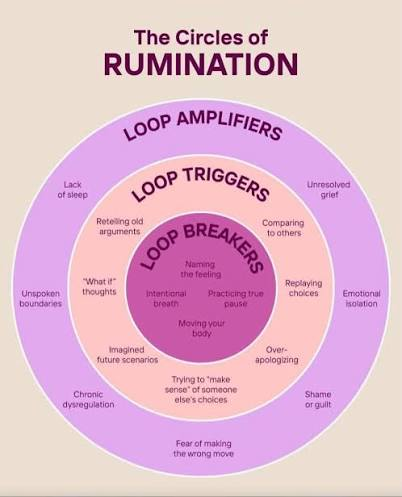
One helpful way to understand rumination is to see it as a pattern with three layers: triggers, amplifiers, and breakers. Naming these layers can make the cycle easier to recognise and interrupt.
Triggers are the thoughts that pull you into the loop. Retelling old arguments, replaying choices, imagining future scenarios, or comparing yourself to others can all spark rumination. These habits often feel productive; as though you’re trying to solve something, but they rarely bring clarity. Instead, they keep your attention fixed on the past or the imagined future, increasing anxiety and emotional fatigue.
Amplifiers are the conditions that make rumination stronger. Lack of sleep, unclear boundaries, chronic dysregulation, shame, emotional isolation, and unresolved grief can all intensify overthinking. When your nervous system is already stretched, intrusive thoughts become harder to interrupt and easier to believe.
The encouraging part is that rumination can be disrupted. Breakers are small, intentional practices that help you return to the present moment. Naming the feeling you’re experiencing, taking an intentional breath, practising a pause, or moving your body can create enough space for your mind to shift. These strategies support emotional regulation and help reduce the intensity of the thought loop.
If you recognise yourself in these patterns, you’re not alone. Rumination is a normal response to stress, uncertainty, and emotional overwhelm. Working with a counsellor can help you understand your triggers, strengthen your boundaries, and develop practical tools to support calm rather than anxiety.
