
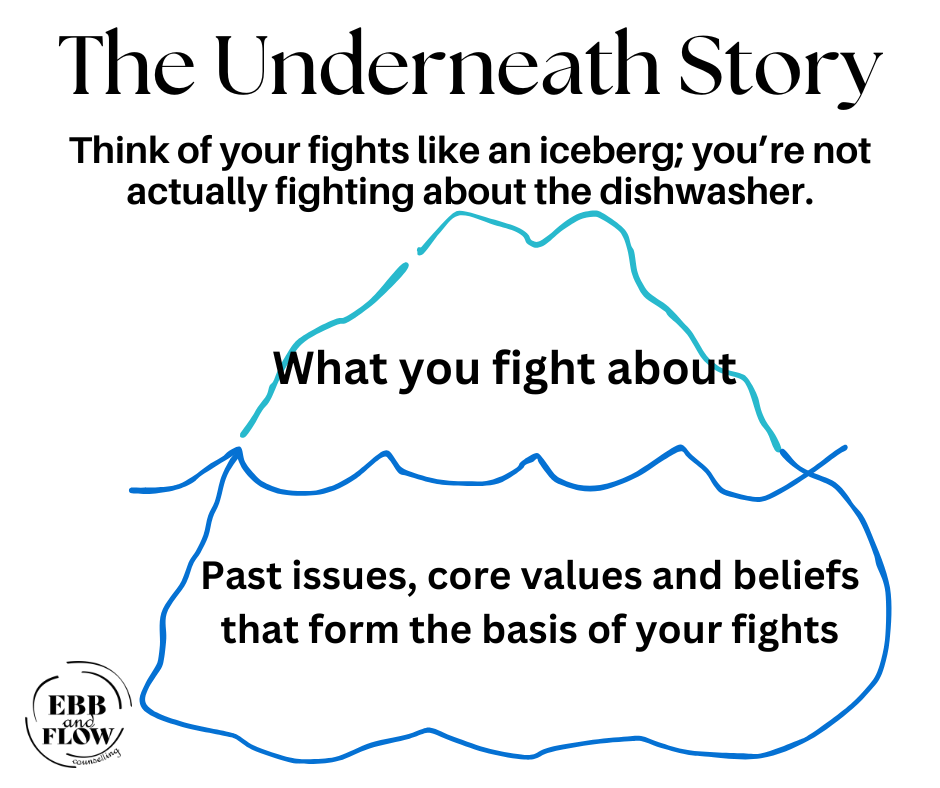
What you fight about and why you are fighting are not the same thing. If you’re stuck in circular arguments and a blame game cycle with your kids, partner or friend, stop and think about ‘the underneath story’ to find a resolution.
The Underneath Story
When I was about 20, my pastor at the time taught me a really beneficial strategy to help me in my relationships. He said that fights are rarely about things like who takes out the rubbish bins and why the toilet seat is always up. Instead, he said, we fight when it seems that our feelings, values and self esteem are being disregarded, or worse, squashed.
What you fight about can become the focus of your arguments when you’d do better to pause, and ask yourself how that topic is impacting your emotions, self esteem and revelaing your values. By not tidying their room, does your teenager’s behaviour raise feelings in you that they do not care about what you say? If a friend continuously cancels plans to meet up at the last minute, does that bring up the feeling that they don’t respect your time? Perhaps a colleague takes credit for your ideas and work. Does it feel as if they are taking away your power? When your partner has little regard for cleaning up the kitchen after they’ve cooked, are they adding to your stress and overwhelm?
These examples are simple, but clear ways that demonstrate how we fight about behaviour, but overlook the underneath story of feelings, values and our personal self esteem. Behaviour change in others that doesn’t address the emotional needs in us is of little value.
The Iceberg Situation
However, it takes some work to identify this iceberg situation – where the issue we see is hiding the values below the surface. This work can be incredibly useful to help us set boundaries, express what we need and to grow personally. Involving reflection and education, the work is well worth it in the long term.
People Who Feel Supported In Their Relationships, Fight Differently
People who feel supported, cared for, seen and loved by those around them are less likely to have raging arguments about things like the floordrobe in their teen’s room. When you have safe relationships, what you fight about will change. How you argue and the amount of spontaneous rows will also evolve into a more mature way of relating with those around you.
Learning about the underneath story can be very beneficial in all your relationships. If you’d like to work on this, reach out for some counselling sessions so that you feel supported and guided in navigating new ways of communicating with those who are important to you.
